
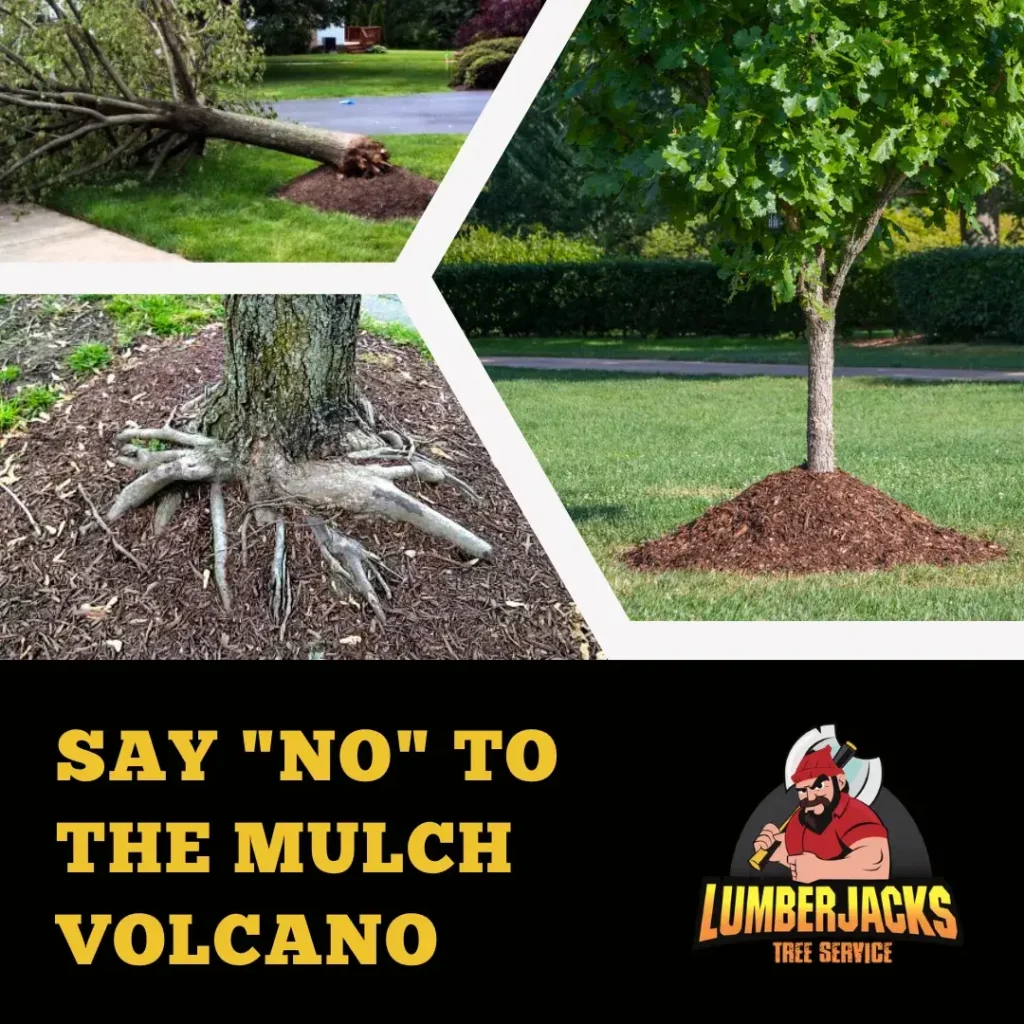
Mulch volcanoes are a common sight in gardens and landscaping, but they are actually bad for the health of trees and plants. Mulch volcanoes are created when a large amount of mulch is piled up against the trunk of a tree. This creates a cone-like shape that resembles a volcano, hence the name.
When mulch is piled high against the trunk of a tree, it creates a moist environment that is ideal for the growth of fungi and bacteria. These microorganisms cause decay in the bark and wood of the tree, leading to weakened branches, root rot, and potentially even tree death.
In addition to promoting decay, mulch volcanoes can also cause the tree to grow shallow roots. This is because the roots are encouraged to grow up towards the surface of the soil in search of oxygen. Shallow roots make the tree more susceptible to wind damage (cause it to tip over) and can also make it more difficult for the tree to absorb water and nutrients, which help it grow healthy and strong.
Another problem with mulch volcanoes is that they often attract pests, such as rodents and insects. These pests can cause further damage to the tree by chewing on the bark and wood or by spreading diseases.
To avoid the problems caused by mulch volcanoes, it is important to properly apply mulch to trees and plants. Mulch should be spread out in a thin layer around the base of the tree, no more than 2 – 3 inches high while leaving 2 – 3 inches of space between the mulch and the trunk. This will allow air to circulate and prevent the growth of microorganisms that can cause decay.
So, while mulch volcanoes may look appealing, they are bad for the health of trees and plants. Proper mulching techniques should be used to ensure that trees and plants remain healthy and strong. By taking the time to properly apply mulch, you can help promote the growth of healthy trees and plants for years to come.