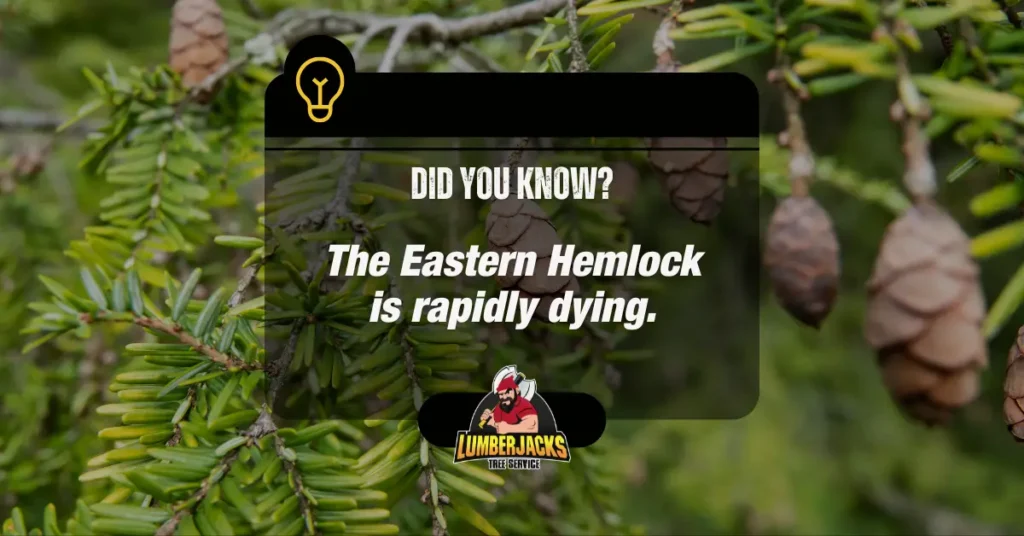
Towering, graceful, and vital to our forest ecosystems, Hemlocks are among the most beloved evergreens in North America. Yet across the eastern U.S., these giants are dying at alarming rates — and the cause is both visible and invisible.
What’s Killing the Hemlocks?
The primary culprit is the Hemlock Woolly Adelgid, or HWA — a tiny, sap-sucking insect no larger than a pinhead. It attaches to the undersides of hemlock branches, drawing nutrients and halting the tree’s ability to transport water. Over time, the tree weakens: needles yellow and drop, branches thin, and death can follow within just a few years.
Why This Should Matter to You
A dying hemlock doesn’t just affect the forest — it impacts your property, your water, and the wider environment. When hemlocks weaken or die, they can become hazardous, driving up removal costs and leaving unsightly gaps in your landscape. On hillsides and near streams, their deep roots play a crucial role in stabilizing soil, preventing erosion, and maintaining clean, cool water flow. Without them, runoff increases, stream temperatures rise, and local ecosystems suffer. As cornerstone species, hemlocks support countless shade-loving plants and wildlife, and when they disappear, so does much of the unique biodiversity that defines our forests.
What You Can Do Right Now
- Inspect annually for white, cottony clusters at the base of needles — a telltale sign of HWA.
- Treat proactively: systemic insecticides can protect healthy hemlocks for years when applied correctly.
- Consult an arborist experienced in pest management and slope or streamside care.
- Stay informed about regional alerts and pest spread updates.
These trees are more than just scenery — they’re the backbone of our forests. If you suspect a hemlock on your property is at risk, don’t wait until it’s too late.
Protect Your Hemlocks with Lumberjacks Tree Service
Lumberjacks Tree Service has years of experience managing Hemlocks throughout southeast Tennessee, from pest treatments to tree health assessments and safe removals when needed. Our certified arborists understand how to protect your trees, your property, and the local ecosystem.
👉 Contact Lumberjacks Tree Service today to schedule a professional hemlock inspection and help preserve the natural beauty of your landscape for generations to come.