Stop, Drop, Don’t Top
“Topping” a tree refers to the most harmful tree pruning practice known. For over 25 years, literature, seminars, videos, webinars and more have warned against this damaging and outdated practice, though it is still commonly used among the uneducated.
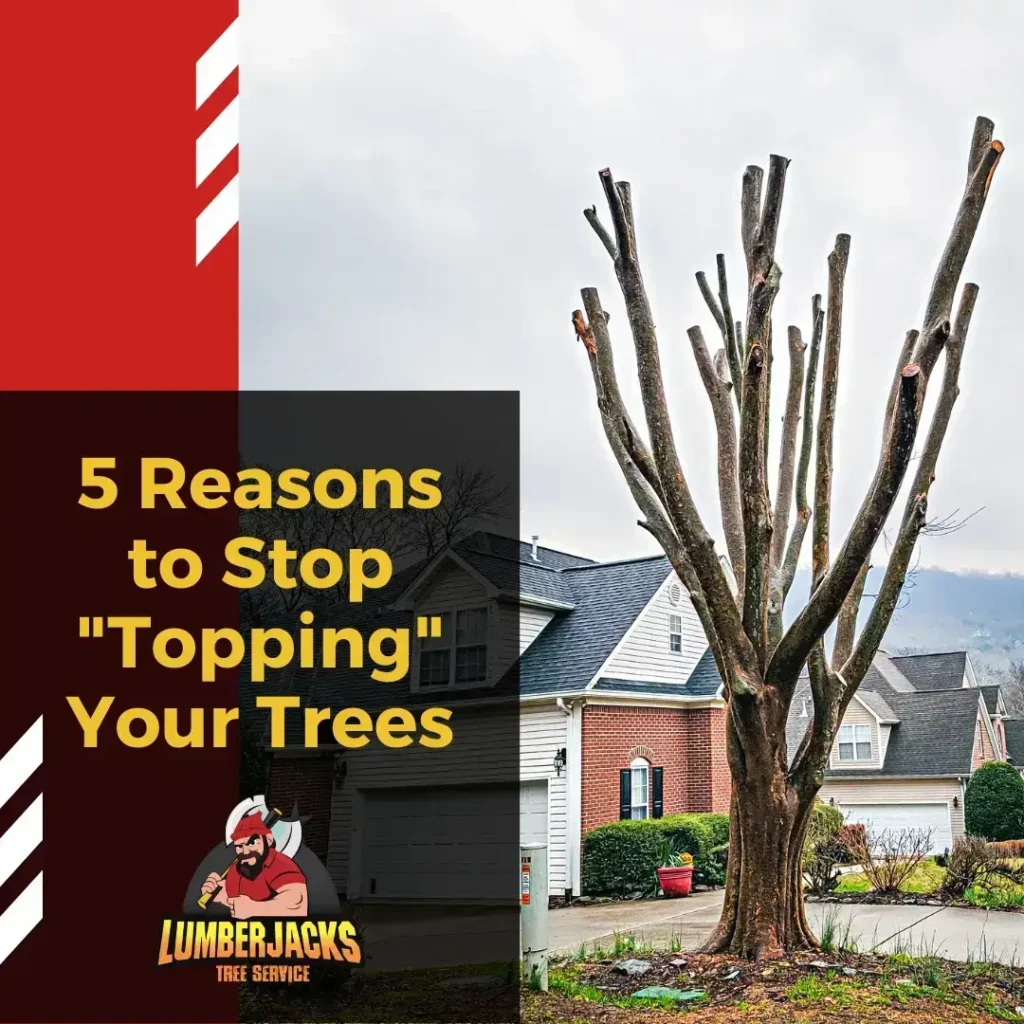
Topping of trees, also known as lopping, hat-racking, tipping, and rounding over, is the drastic removal of tree branches to stubs or to lateral branches that are not large enough to assume the role of the main support system of the tree.
In most cases, topping is used to reduce the size of a tree, and many homeowners take on this work themselves. Not only is tree work for an untrained person a safety risk, topping is not an appropriate method for reducing height and causes long-term damage to the tree. Topping should not be confused with proper pruning of a tree. A topped tree is easy to spot: The natural shape of the tree has been destroyed, leaving stubs of branches with no leaves. With proper pruning, it may look as if no work has been done at all. A certified arborist carefully selects and removes branches that beautifully maintain the natural shape of the tree.
5 Reasons to Not Top a Tree:
- Topping a tree causes immediate injury and leaves large, open wounds which expose the tree to decay, pest infestations, and disease. This ultimately results in a weaker tree and an earlier death of the tree. Weaker trees drop limbs and uproot easier in a storm or high wind, potentially causing damage to homes, vehicles, garages, and more.
- Leaves provide the health and energy for the tree. When a tree is topped, 50% – 100% of the leaves are removed, which starves the tree of vital nutrients. Without the proper nutrition, the tree cannot heal the large wounds or fight off pest infestations (as mentioned above).
- Topping leads to unwelcome risk. Many new shoots will emerge from buds near the surface of the old branch. Unlike normal branches that grow slower and deeper into the layers of the tree, new shoots grow quickly and on the outermost layers of the tree. This creates a weak attachment, and as the new limbs grow larger, their attachment location grows weaker, resulting in easy breakage and dropping of limbs. While the goal may have been to reduce the size of the tree, you’ve created a new risk that can lead to property damage, more stress, and insurance claims.
- Trees that have been topped are ugly. Topping destroys the natural shape of the tree and can actually decrease your home value and curb appeal. Because topping removes the ends of branches and their leaves, the tree will look mutilated for up to six months before leaves begin to grow again. A tree that has been topped will never regain its natural form.
- There are hidden costs to topping a tree, making it an expensive (and unnecessary) waste of money. First, you have increased liability potential because topping is considered an unacceptable pruning practice. Damages from branch failure of a topped tree may lead to a finding of negligence in a court of law. Next, if the tree survives, it will likely require corrective pruning measures within a few years. If the tree dies, you’ll have to pay to have it removed. And lastly, reduced property value. Disfigured, topped trees are viewed as a corrective expense, whereas healthy, properly-maintained trees, may add up to 20% more value to a property.