Trees are a crucial part of our landscape, providing beauty, shade, and environmental benefits. However, even the healthiest trees can fail if certain conditions arise. Understanding why trees fail can help you take preventative measures to ensure their longevity. Here are some of the most common causes of tree failure and how you can prevent them:
𝟭. 𝗥𝗼𝗼𝘁 𝗜𝘀𝘀𝘂𝗲𝘀
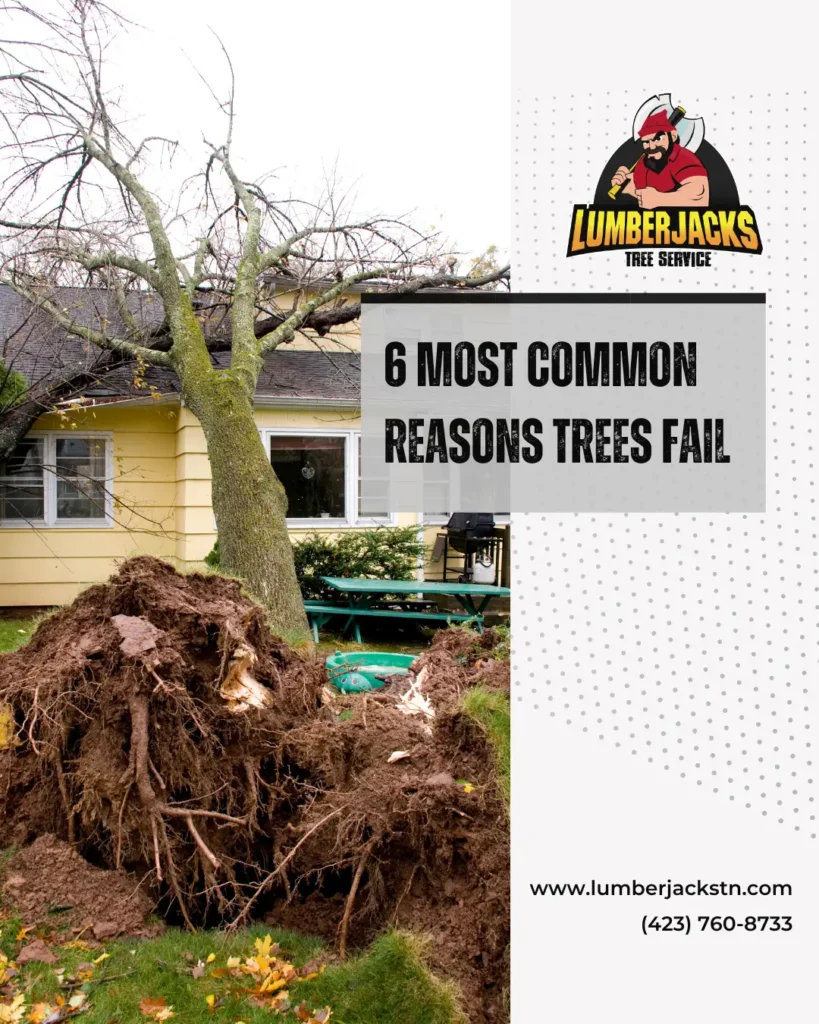
Roots are the foundation of any tree, and when they are compromised, the tree’s overall stability is at risk. Problems such as poor planting, soil compaction, or damage during construction can significantly affect a tree’s root system. A damaged or restricted root system may slow the tree’s growth or, in more severe cases, cause it to topple. It’s essential to avoid damaging roots, especially during landscaping or construction, and ensure trees are planted in areas where their roots can thrive.
𝟮. 𝗗𝗶𝘀𝗲𝗮𝘀𝗲
Diseases, such as fungal infections, can gradually weaken a tree by attacking vital parts like the trunk, roots, or leaves. While a tree may appear healthy externally, it could be suffering from internal decay. Early signs of disease include discolored or wilting leaves, bark shedding, dead or weakened branches, and fungi, like mushrooms, growing at the tree’s base. Regular inspections, along with proactive care, can identify and prevent these issues before they lead to further damage or tree failure.
𝟯. 𝗛𝘂𝗺𝗮𝗻 𝗗𝗮𝗺𝗮𝗴𝗲
Trees are vulnerable to various forms of human damage. Construction projects often affect tree roots through soil compaction or trenching, which disrupts the tree’s ability to absorb nutrients and water. Additionally, improper pruning or making incorrect cuts can create wounds that make the tree more susceptible to pests, diseases, and decay. Even minor injuries to the trunk or root system can compromise the tree’s structural integrity, so care should be taken during any nearby activities.
𝟰. 𝗦𝗮𝘁𝘂𝗿𝗮𝘁𝗲𝗱 𝗦𝗼𝗶𝗹 𝗮𝗻𝗱 𝗦𝗵𝗮𝗹𝗹𝗼𝘄 𝗥𝗼𝗼𝘁𝘀
Too much water can be just as harmful as too little. Saturated soil weakens a tree’s root system, making it difficult for the roots to maintain a firm grip on the ground. This can cause the tree to become unstable and prone to falling, particularly during storms. Shallow-rooted trees are at higher risk because their roots don’t anchor deep enough to support the tree’s weight. Ensuring proper drainage around trees and planting deep-rooted species can help mitigate this issue.
𝟱. 𝗣𝗲𝘀𝘁𝘀
Pest infestations can severely damage trees, often without immediate signs. Insects like termites, emerald ash borers, and beetles can hollow out trunks, destroy roots, and weaken the tree’s structure. If left untreated, pest damage can lead to tree failure. Regular inspections and proactive pest control measures can help keep infestations at bay.
𝟲. 𝗗𝗿𝗼𝘂𝗴𝗵𝘁
Extended drought periods can leave trees weak and vulnerable. Without sufficient water, trees struggle to maintain their strength, which makes them more susceptible to other stressors such as pests, disease, or root damage. Deep watering during dry periods can help your trees remain healthy and resilient.
𝗣𝗿𝗲𝘃𝗲𝗻𝘁𝗶𝗻𝗴 𝗧𝗿𝗲𝗲 𝗙𝗮𝗶𝗹𝘂𝗿𝗲
Proper care and regular maintenance are essential for preventing tree failure. Having your trees inspected by a certified arborist can help identify potential risks early on. It’s also important to follow proper pruning techniques, monitor for signs of disease or pests, and ensure the tree’s root system is healthy and supported by good soil conditions. Adequate watering, especially during drought conditions, will also keep your trees thriving.
In short, a little preventative care can go a long way in protecting your trees from failure. If you’re unsure about the health or stability of a tree on your property, contact us for a free, professional assessment. Together, we can keep your landscape beautiful, safe, and full of healthy trees!
(423) 760-8733