
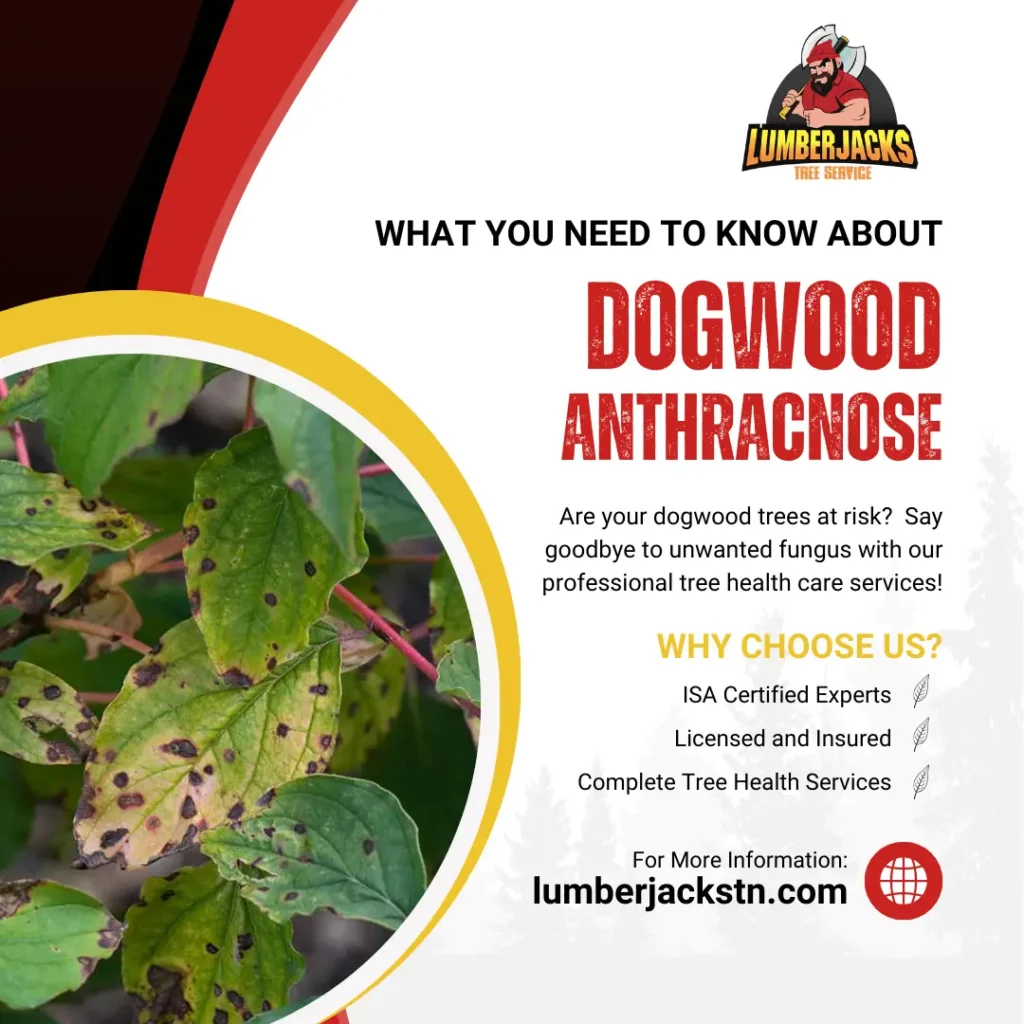
Dogwood anthracnose is a hazardous threat to dogwood species, including the beloved native flowering dogwood and Pacific dogwood trees. Introduced from Asia in the late 1970s, this fungal pathogen, Discula destructiva, has destroyed natural populations of flowering dogwood.
𝘚𝘺𝘮𝘱𝘵𝘰𝘮𝘴 𝘰𝘧 𝘋𝘰𝘨𝘸𝘰𝘰𝘥 𝘈𝘯𝘵𝘩𝘳𝘢𝘤𝘯𝘰𝘴𝘦:
– Tan spots with irregular purple margins on leaves, which progress upwards if cool, wet weather persists.
– Brown blotches on leaves, causing scorch or blight, often spreading into the petiole and infecting the shoot.
– Sunken tan to brown spots with purple borders on twigs, which can girdle the twig and result in twig dieback.
– Blighting of terminal leaves, leading to death of terminal buds and reduced spring budbreak.
𝘋𝘪𝘴𝘦𝘢𝘴𝘦 𝘊𝘺𝘤𝘭𝘦:
– Persisting as cankers on trunks and branches, the fungus produces large amounts of spores spread by rain, insects, or birds in cool, moist weather.
– Conidia (spores produced by fungi) formed on cankers are splashed by rain onto newly expanded leaves, flowers, and succulent tissues, initiating new infections.
𝘋𝘪𝘴𝘦𝘢𝘴𝘦 𝘔𝘢𝘯𝘢𝘨𝘦𝘮𝘦𝘯𝘵:
– Cultural and chemical controls are crucial. Pruning infected parts removes the infection source, while maintaining tree health through adequate watering, mulching, and use of resistant cultivars is essential.
– Fertilizing young dogwood trees should be avoided in the first year and done cautiously thereafter, ensuring the right ratio and timing.
– Registered fungicides can help reduce new infections, but treatments will not cure existing ones. Apply treatments three to four times at 14-day intervals starting at bud break.
If you feel your dogwoods are in danger, contact us today for expert advice. We will provide you with a free Tree Risk Assessment and information about our tree health care program. Now is the time to protect your dogwood trees from anthracnose!
Note: The information provided is a condensed summary and should not be considered a substitute for professional advice and treatment.