
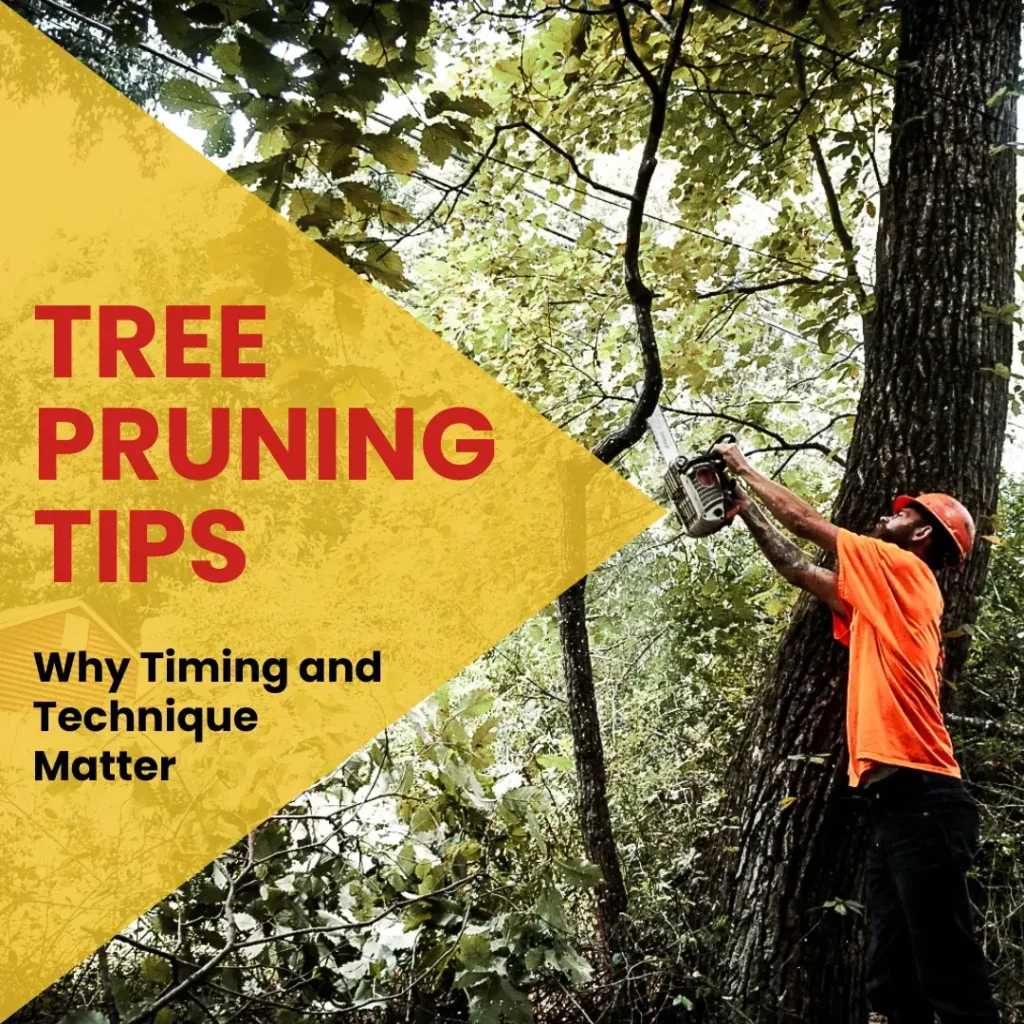
Did you know the best time to prune a tree depends on when they bloom? When inspecting a tree for pruning, you’ll need to know if the tree blooms on the current season’s growth or last season’s growth in order to properly care for the tree.
Cherry blossoms and dogwoods are a great example of current season’s growth bloomers. This means they bloom on the new growth that emerges in the current season. For these types of blooms, it is best to prune in the winter or early spring while the tree is still dormant. This allows you to shape the tree while reducing the risk of cutting off potential blooms.
Other trees, such as magnolias and lilacs, bloom on the growth from the previous season. For these trees, pruning is best completed right after they finish flowering in late spring to early summer. This timing ensures you won’t remove next season’s potential blossoms.
Timing also helps insure the tree has an opportunity to seal itself. Using pruning/tree sealants is destructive to your tree because it suppresses the natural healing of pruning wounds. Sealants can also trap moisture inside the tree, which can lead to decay and fungi, and may cause your tree to die. By understanding the best time to prune your tree, you give your tree a chance to grow new wood before going dormant, which will naturally seal the pruning wound to protect against pests and disease.
And while timing is important, it isn’t everything; it is also important to understand technique. When you prune a tree, you’re guiding its growth and health. Pruning helps by:
- Reducing safety risks
- Improve esthetics
- Boost tree health
Falling branches or limbs are a serious hazard, especially if the tree is near a walkway, roadway, or structure, such as a home. Not only could falling branches or limbs cause bodily or structural harm, it may cause you to have to get your insurance involved. And depending on the situation, your insurance may not cover the fault.
Technique is also critical when it comes to creating a natural shape that suits your landscape. Not only is “topping” a tree harmful to your tree, it is also unsightly and may decrease your property value. A certified arborist will never “top” your tree(s) because they understand that effects it can have. By following the tree’s natural shape, your landscaping will look desirable and increase curb appeal.
Something else a lot of people don’t know is that you shouldn’t prune newly planted trees for the first year. For the next two to five years, structurally pruning the tree is important, which means you’ll need to understand the structure of the tree. And for mature trees, you never want to remove more than 10% of the crown (branches and leaves) in the current growing season. Mature trees don’t heal as quickly, and removing too much can cause irreversible damage.
And, this is why understanding the technique of pruning is essential. Making clean cuts, avoiding over-pruning, and respecting natural growth patterns will help keep your tree looking beautiful while also being healthy.
Your trees are an investment in your property, and we want to help you keep your trees healthy. So, the next time you approach your tree with pruning shears in hand, take a moment to ask yourself: Do I understand the best time and technique to prune this tree? If the answer is no, contact us for a free, tree pruning assessment.