It is no secret that trees can be an expensive project, especially if you don’t give them proper care and maintenance. Proper care and maintenance means that you occasionally prune them to avoid overgrown branches, as well as additional watering and fertilizing as needed. While trees can also be expensive and sometimes time consuming, they can also add value to your home in terms of curb appeal (if properly maintained) and shade, and may even save money on your energy bill.
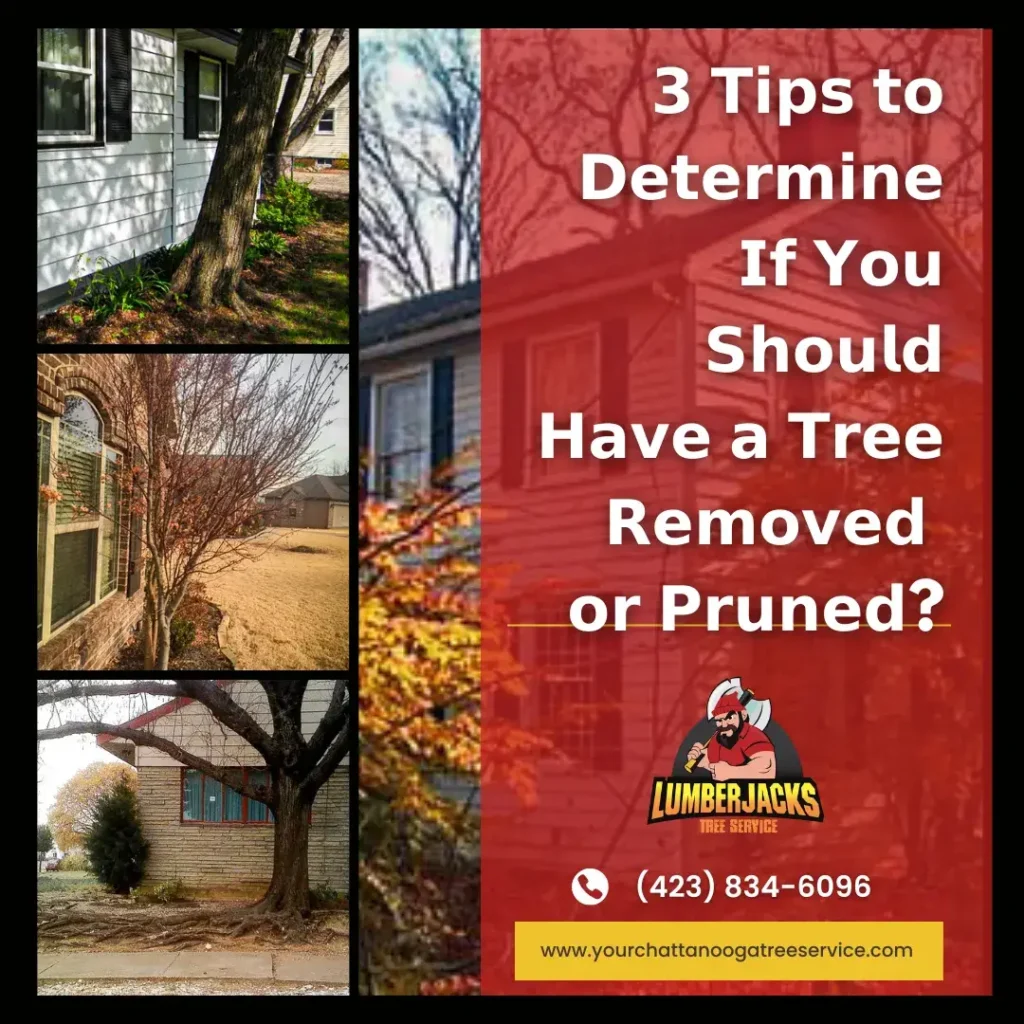
So if you aren’t sure as to whether or not you should bid farewell to a tree or prune it back, here are three scenarios to take into consideration when deciding:
1. In the future, what do I plan on doing in the area of the tree?
If you think that you are going to be planting flowers or bushes around where the tree currently stands, it may not be a bad idea to cut it down. Why? The issue with having a garden directly in front of a tree is that the tree is going to significantly reduce the amount of sunlight that the flowers receive and may end up having a negative impact on the flowers in the wrong environment.
If you plan on building anything within 15-20 feet of where the tree stands, that can cause another set of issues. Mainly, the quality of the soil after the building is erected and an increased chance that roots will damage the foundation of the building, as well as plumbing.
2. Is the tree too close to my home now?
If this is the case, then that can be an expensive mistake but one that is necessary to fix for the same reasons mentioned above. In some cases, you may be able to get the tree moved, but if the tree is thoroughly established in the ground, it may not be possible to move it without damaging it. In this case, you’ll want to give us a call to give you a free evaluation and estimate of your options.
3. Do I want to continue to take care of and invest in this tree?
If the answer to this question is, “No”, then you should have the tree removed. Overgrown branches, lack of soil treatment, and overall preventative maintenance will create negative consequences for the tree. This may include root rot, pest infestation, and/or poison ivy, to name a few. Each of these weakens the tree and leaves it prone to causing damage to your property. Even worse, if something does happen to the tree, and it’s determined by your homeowners insurance that there was neglect, then it’s possible your claim will be denied.
Once you’ve answered these three questions, you will have a better understanding your desire to care for the tree and what it will take to property maintain it so it stays healthy and strong. If you’d like a free evaluation and estimate for your project (removal or pruning), send us a message or give us a call at (423) 834-TREE.