Many times when people move into a new home, trees already exist on the property, and in new construction homes, trees get planted. Or perhaps you’re a property owner and want to add more shade or dimension to your landscaping, so you decide that planting trees is a great option. What many people don’t realize though, is that certain trees are high risk for a yard, especially if they are too close to the house.
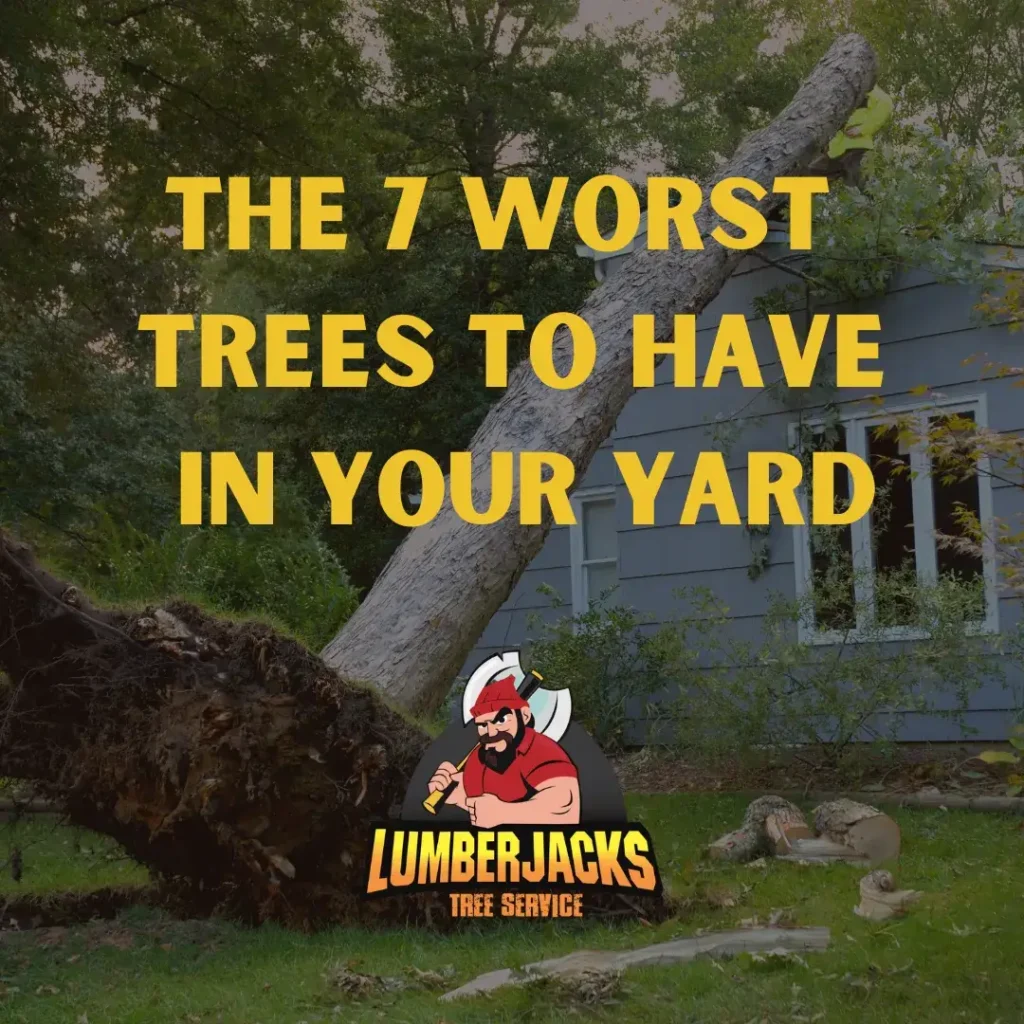
So, the seven worst trees to have in your yard are:
1. Bradford Pear. First, their beautiful blooms have a very unpleasant smell, almost fish-like. Second, this tree is extremely prone to splitting during storms and well-known for causing damage to homes. And lastly, because its seeds spread far (especially when the wind blows), this is a truly invasive plant that often grows too large for where it has been planted. If you have these in your yard, have them assessed before they cause [any more] damage to your property.
2.. Silver Maple. Because this is a fast-growing tree, its roots stay close to the surface and will quickly tear up your yard and cause cracking in concrete, ruin retaining walls, and make grass growth difficult. The shallow roots also mean it’s much more likely to to blow over during high winds
3. Leyland Cypress. While many property owners like to plant these for privacy, this tree is susceptible to root rot and dies of Seiridium or Botriospheria canker within 10 to 20 years. Instead, consider Holly, Radicans, or Yews for privacy.
4. Ash. While many people have heard of the emerald ash borer (which is still a huge problem with these trees), they also have a very shallow root system that grows laterally. This means their roots spread wide and are known for cracking the foundation on homes.
5. Box Elder. This tree is prone to box elder bugs, which not only infest the tree, but also homes and other buildings. These trees also have a short life with weak wood, causing them to easily break and cause damage during storms or high winds.
6. Weeping Willow. These are an obvious favorite for many, but again, the root system is why this tree should be avoided in a yard. Easily cracking underground pipes and crumbling foundation, these roots are aggressive and strong. It is also more susceptible to disease and pests than many other trees.
7. Poplar. These tree easily grow to over 100 ft, and their root system can be 3 times as long as the tree is tall. And because these massive roots stay shallow, they often crack and lift sidewalks and driveways, destroy retaining walls, and clog pipes while trying to get to the surface for water. One poplar tree in your yard can easily affect several neighbors.
While all of these trees are beautiful in their own right, each of these has major downfalls that make them inappropriate to be planted in a yard, especially if they are planted too close to the house. So, if you have questions about your trees, send us a message or give us a call at (423) 834-6096, and we’ll be happy to help you.